


Interview with Composer Judith Bingham
Matthew M. Davis: Judith, thank you for agreeing to field some questions!
Judith Bingham: My pleasure!
MMD: So my sources tell me you have recently written and published several original pieces of music that have to do with our man Samuel Johnson. Can you tell us a little about these compositions and also how you got drawn into writing music about Johnson?
JB: I was introduced to the world of Samuel Johnson by Alan Gibbins, who is the Treasurer of the Johnson Society in London. He lives in a stunning Queen Anne house in West Malling, Kent, where Johnson once stayed en route for somewhere, and he has a first edition of the Dictionary, which I started to leaf through when I was staying with him once — back in 2014, I think. He and his wife have commissioned three pieces from me, two of which are Johnson related.
Strange Words (Edition Peters, 2020), for tenor and cello, features definitions of words by Johnson and snippets from the works of William Blake. The idea was that Blake and Johnson might have passed each other in the street, though they never actually met. I take words like fantasy and mystery and show how differently each man explored the word.
In 2023 I wrote Hodge: Dr. Johnson’s Cat (Composers Edition, 2023). It’s for a tenor vocalist or speaker and a clarinettist. It’s taken partly from Boswell’s record of his meeting with Rousseau, but includes various other comments about Hodge, and cats in general. I wanted to show how Boswell could be quite rude about Johnson when he was not in his company. He talked about his antipathy to cats when he visited the philosopher Rousseau on his death bed.
Seven Short Prayers (Edition Peters, 2025) is a series of short anthems, with four prayers by Johnson and three by Jane Austen. Again, this is about two people who could have met but didn’t. Jane Austen was a big fan of Johnson’s. The piece was commissioned by Kalmar Cathedral in Sweden. It’s a connected piece, but the seven prayers can also be performed separately.
All these pieces, in one way or another, are London pieces — I have lived in London for 55 years and have written quite a lot of pieces about the city, historically speaking. I love thinking about famous people who might have passed each other in the street without realising.
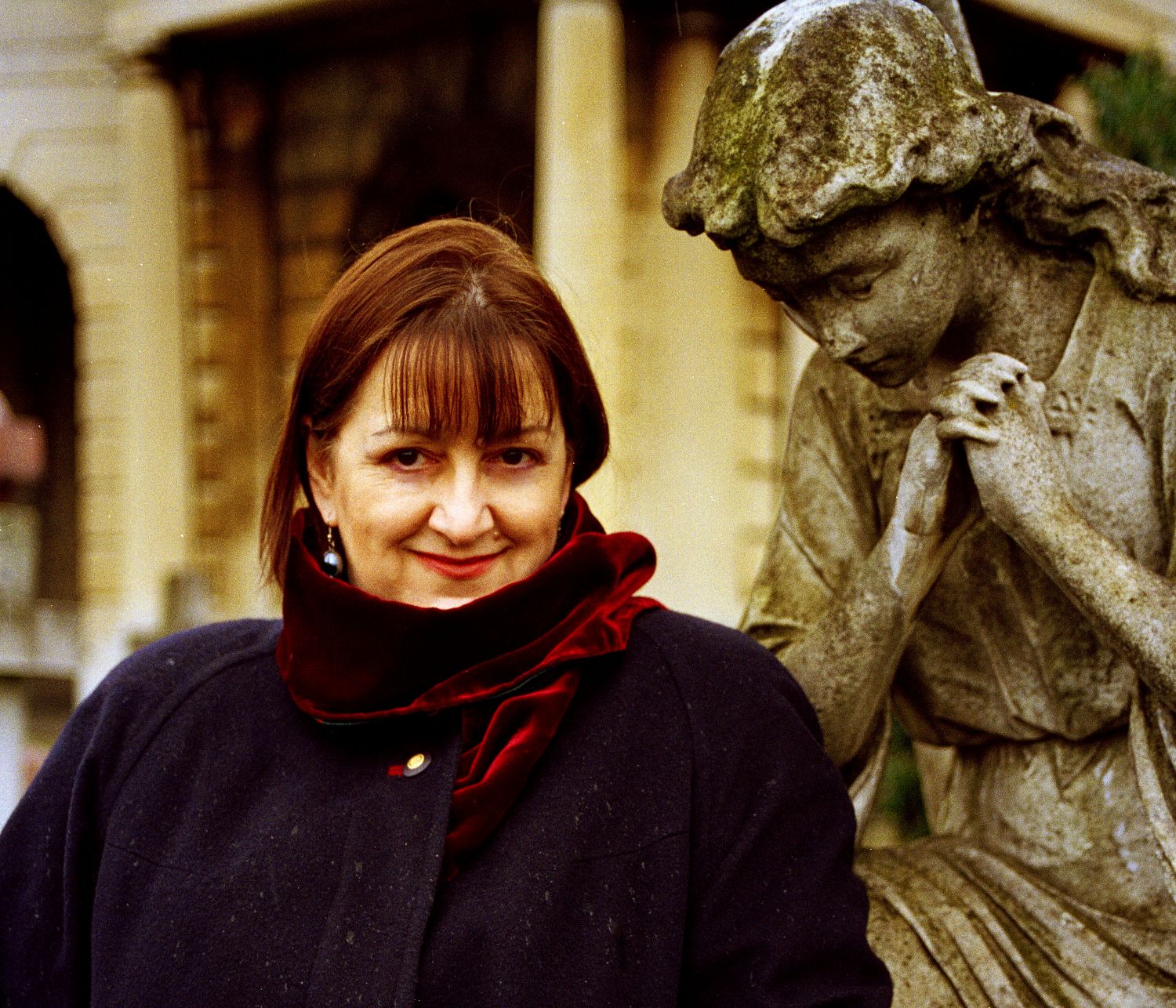
Figure 1: Judith Bingham
MMD: Is there a way to listen to performances of any of these pieces? Are there any recordings available online?
JB: There’s a recording of Strange Words with Tenor James Gilchrist and Cellist Alice Neary. There’s also a recording of Hodge, with Gilchrist and Clarinettist Robert Plane. Seven Short Prayers hasn’t been recorded yet, but the Austen settings are slated to be recorded by Canterbury Cathedral in June of 2026.
MMD: When and how did you first become interested in music?
JB: I was always musical, always interested. When I was eighteen months old, my mother wrote to a magazine to ask if it was unusual for child that age to be able to sing perfectly in tune, and right through my childhood I was asked to sing for people, though it terrified me. (I was very shy.) I climbed up on the piano stool as soon as I could, and my father taught me to play. Through his record collection I learned the standard European repertoire. He didn’t really like contemporary music — Sibelius was about as modern as he got. I used to listen to classical music on the radio — on what used to be called the BBC Third Programme, now Radio 3. Through that I heard a lot of contemporary classical music.
MMD: When and how did you begin to compose music?
JB: According to my mother, I was three, but I don’t remember. I made things up at the piano and enjoyed having my own secret musical world. I started writing things down when I was ten or eleven. I was never encouraged or given any special teaching as a child. In those days, the fifties and sixties, in the north of England, the idea of a girl becoming a classical composer was laughable, unheard of. I taught myself by listening and playing. Berlioz was a formative influence through the sixties. Reading the scores of his music was intensely inspirational.
MMD: I’d be interested to know how Hodge the Cat became the star of that one piece. That cat must have a great publicist. I mean, Boswell didn’t even like cats, and Johnson is on record as saying he had other cats he liked better than Hodge, but two hundred and forty years have passed and we are still talking about Hodge! There can’t be many cats who have been dead that long but are still being celebrated in statues and musical compositions.
JB: There is a feeling from Boswell that he rather despised Johnson’s love of cats. It certainly sounds as if he was allergic — although that word doesn’t show up in dictionaries until 1906! I was reading about Boswell going round Europe and how he met Rousseau, despite Rousseau trying to avoid him. Rousseau asked him, “Are you a cat man or a dog man,” and Boswell said he preferred dogs. It’s interesting to me that Boswell met Casanova a couple of times and disliked him. I’d quite like to write a piece about that, as I’ve already written one piece about Casanova. Boswell and Casanova were both gentlemen adventurers, and we know so much about eighteenth-century society because of both of them.
MMD: In Seven Short Prayers, you juxtapose prayers by Johnson and prayers by Jane Austen. Could you explain what made you pair those two writers? It seems to me Austen’s prayers sound quite different from Johnson’s. Do the two of them balance each other out somehow?
JB: Yes, the difference in the spiritual approach was marked. Johnson seems really penitential and thinks himself inferior, spiritually. His prayers are full of self-loathing and they were written for him to read out in church. But Jane Austen seems more interested in getting us all to be nicer, there’s a feeling of a village community. But both Johnson and Austen use quite plain language, which appealed to me, and I tried to match the music to that.
MMD: Tell us a little about how you compose — and when Johnson comes into the process. What comes first, the music or the words? Do you sit down saying, “Now I will write something on Samuel Johnson”? Or do you write various bits of music and then decide “this piece reminds me of Johnson”?
JB: This is hard to explain. I always write to commission — that is my main source of income. Commissions always come with a brief — the event, the theme of the event, the types of instruments or singers, the length of the piece, there’s nearly always quite a few things you have to take into account. Alan and Mary Gibbins wanted pieces to celebrate the arrival of their grandchildren, and the pieces were performed in their sitting room — a place where Johnson and possibly the painter Turner would have sat — and there would be children there. But the piece also has to have a future! It’s a large but not huge room — they managed to get 60 people in there, standing up, with the children sitting on the floor at the front. So there’s no room for a lot of musicians, and no room for large instruments — piano, for example. Alan was very keen for me to reference Johnson in some way, and I had spent some time looking at his first edition and really enjoying the definitions, which as you know, tell you something about Johnson. I thought with Strange Words that I would contrast Johnson’s attempt to pin down the essential meaning of a word with Blake’s more poetic approach. I put together a text, and the writing of the music took about a month, I think. But you start thinking about the piece while you’re writing the previous piece — this is called pre-composition! Writing something that will repay several hearings means I have to put a lot of effort and layers of meaning into the music, and it has to be perfect.
MMD: I’m a fan of blues music, but when I go to concerts I get worried — because there is usually nobody under the age of 60 in the audience. I worry that there won’t be any listeners left in twenty-five years. I’ve heard people express similar concerns about classical music. Is the audience for classical music aging? Are young listeners coming on board? Are you concerned about the future of classical music?
JB: People used to worry about ageing audiences when I was young. It has struck me since that classical music tends to appeal more to older people. Often people come to classical in their thirties or forties, wanting more than pop music has to give. Sometimes they hear something at a wedding or a funeral, or they have a child who is part of a choir. Their love of the music comes in sideways. So I don’t worry about grey-haired audiences. They are appreciative and thoughtful. Musicians spend a lot of time, more than you might think, trying to draw young people into classical music. Sometimes, the first time a young person hears an orchestra it is through film music, but I also think (it was like this with the Johnson pieces), that sitting right by someone who is playing a cello or a harp, it’s entrancing for a young person. They can’t believe someone is actually producing music in front of them, and that can lead somewhere. Still though, the best way to get children interested is if they hear music at home. Pop music is, in my opinion (feel free to disagree) corrupting to young minds, and classical music can seem too much like hard work. I really regret the rise of pop music in the world; it has spoiled a lot of indigenous music, as well. Hobby horse! I’ll stop now.
MMD: Have you got any more Johnson-inspired or C18-inspired music in the works?
JB: There are plans to write something about Fanny Burney at some point, and I’ll always come back to Blake. It depends what I get commissioned to do. There’s no predicting it.