


Johnson’s Reading for the Dictionary: Upon the Spanish Invasion
In the first edition of the Dictionary, Johnson defined bravado as “a boast; a brag.” He then appended an illustrative couplet on the Spanish Armada of 1588:
Spain, to make good the bravado,
Names it the invincible armado.Anonymous.
Back in the 1990s, I went looking for the source of this anonymous quotation. I thought it might be easy to find because armado is a rare spelling variant of armada, and bravado is not used much either. I figured there couldn’t be too many poems that rhyme armado with bravado.
I was wrong about that. It turns out there are at least twenty English poems that were printed after 1588 and before 1755 that feature the armado/bravado rhyme.
Beth Rapp Young drew attention to one of these poems several years ago. She identified, as a possible source for the quotation in Johnson’s Dictionary, a song in Westminster-drollery, or, A choice collection of the newest songs & poems both at court and theaters by a person of quality (London: H. Brome, 1671). In that collection the song in question (which is on page 93) is called “An Old Song on the Spanish Armado”:
Some years of late in eighty eight,
As I do well remember…The Spanish train, la[u]nch’d forth amain,
With many a fine bravado
Their (as they thought) but it prov’d not,
Invincible Armado,
Invincible Armado.1
I agree that this merits nomination as a possible source. If there were no rival candidates, I would probably conclude that this was indeed Johnson’s source. However, there are nineteen other candidates, and I will try to show that one of them is significantly closer to the lines Johnson included in the Dictionary.
The poem I wish to put forward as a candidate is an anonymous production that was probably composed in the 1590s or early 1600s. However, I have not found it in any printed book earlier than John Hall’s Jacobs Ladder: Or the Devout Souls Ascention to Heaven, in Prayers, Thanksgivings, and Praises (London, 1676), 115-116. Hall’s book is, in the words of the Oxford Dictionary of National Biography, “a compilation of private, family, and occasional devotions,” including “prayers thanking God for the nation’s deliverance from popery… in 1588 [and] 1605.” The book went through many editions well into the eighteenth century. The poem was also printed in a revised and “inlarged” sixth edition of R.B.’s The English Hero; or Francis Drake Reviv’d (London, 1701).2 In this volume the poem is presented without a title, but in Hall’s book it is presented with the title “Upon the Spanish Invasion in that remarkable year 1588, intended to reduce this nation to Popery and slavery by the (so-called) invincible Armada.” This is probably an editorial title; however, since it is helpful to have a title to refer to, I will use an abbreviated version, “Upon the Spanish Invasion,” in what follows.
Here are the key lines in the poem:
The Pope to make up the Bravado,
Stiles it, The INVINCIBLE ARMADO.
Spain, to make good the bravado,
Names it the invincible armado.
There are three strong points of similarity between “Upon the Spanish Invasion” and the lines in the Dictionary:
Both contain the armado/bravado rhyme, with the singular forms of the nouns and bravado used before armado.
Both contain the noun phrase “invincible Armado.”
Both are tetrameter couplets.
In addition, I would point out that, where there are differences between the two couplets, they are minor differences that would seem to be entirely consistent with the possibility that Johnson supplied the couplet from memory:
For the subject of the sentence, Johnson has “Spain” rather than “The Pope.” However, in 1588 the Pope and Spain were allies in the struggle against Protestantism and England, so the alternative phrasing preserves the basic meaning.
For the verb in the sentence, Johnson has “names” rather than “stiles.” However, these two words are both semantically and metrically interchangeable.3
In place of “to make up the bravado,” Johnson has “to make good the bravado.” The meaning in this case is subtly different.4 However, once again, the two phrases are very close, and once again they are metrically interchangeable.
If we look back at the other candidate — the song from Westminster-drollery quoted earlier — we can see that it is similar to the lines in the Dictionary on points 1 and 2 but not point 3. Also, it does not display the near equivalents noted in points A, B, and C. For these reasons, it seems to me the case for “Upon the Spanish Invasion” is significantly stronger.
If additional evidence is required, I would note that one of the books in which “Upon the Spanish Invasion” was printed is a book Johnson is believed to have consulted. In the Yale Edition of Johnson’s works, Brack and DeMaria list The English Hero as a very likely source for Johnson’s Life of Francis Drake, which was printed in the Gentleman’s Magazine in 1740-41.5 It is possible that Johnson encountered the poem in a post-1701 edition of The English Hero, but it is also possible that he encountered it in an edition of Jacob’s Ladder or in another source.
II
Having looked closely at one couplet, I would like now to step back and consider the larger family of poems that include the armado/bravado rhyme. “Family” seems like it might be the right word because this turns out to be a cohesive and interesting group of related poems.
All of the poems that contain the armado/bravado rhyme were written after the defeat of the Spanish Armada, and in most cases the authors are either describing the events of 1588 or alluding to them. The authors of these poems were almost all English poets who were eager to celebrate the English victory. Almost all of them attack the Spanish for their boasts and bravados, and almost all write as Protestants who detect the hand of God in the English victory. In other words, almost all of these poets give voice to a worldview which is patriotic, Protestant, and providential.
One of the first armado/bravado poems that found its way into print was a Skeltonic6 poem with a lengthy, rhyming title:
A Skeltonicall Salutation,
Or condigne7 gratulation
And just vexation
Of the Spanish Nation,
That in a bravado,
Spent many a Crusado,8In setting forth an Armado
England to invado.9
(London: Toby Cooke, 1589)
O waspish king,
Where[’]s now thy sting,
Thy dart, or sling,
Or strong bow-string,
That should us wring,
And underbring[?]10
A few years later, John Taylor the Water Poet (1578-1653) produced a sequence of historical sonnets, with one sonnet for each year in the recent history of England. When he came to 1588, Taylor chose to focus on the defeat of the Armada:
[1588]
This year Spain with a mighty preparation
With twelve score vessels loadeth Neptune’s back,
With thirty thousand men attempts invasion
Of England’s kingdom, and Eliza’s wrack.11
Then many a bragging desperate doughty Don,12
Proud of the strength of that great huge armado,
Went barely off, though they came bravely on,13
The power of Heaven opposing their bravado.
Our numbers unto theirs inferior far,Yet were they tane,14 sunk, slain, bang’d, thump’d & batter’d
Because the Lord of Hosts, the God of war,
He was our trust and aide; our foes he scatter’d[.]
His name is over all the world most glorious
And through his power his Church is still victorious.15
Although this is not a great poem, it is worth inserting because Taylor trots out many of the elements we find in the armado/bravado poems we are looking at: he rebukes the Spanish for their bragging and boasting, and he presents the English victory as a proof of divine approval.
Shortly after the Armada was defeated, a medal was struck at Middleburg in the Netherlands, with a Latin inscription: flavit [Jehovah] et dissipati sunt 1588 (God blew and they were scattered).16
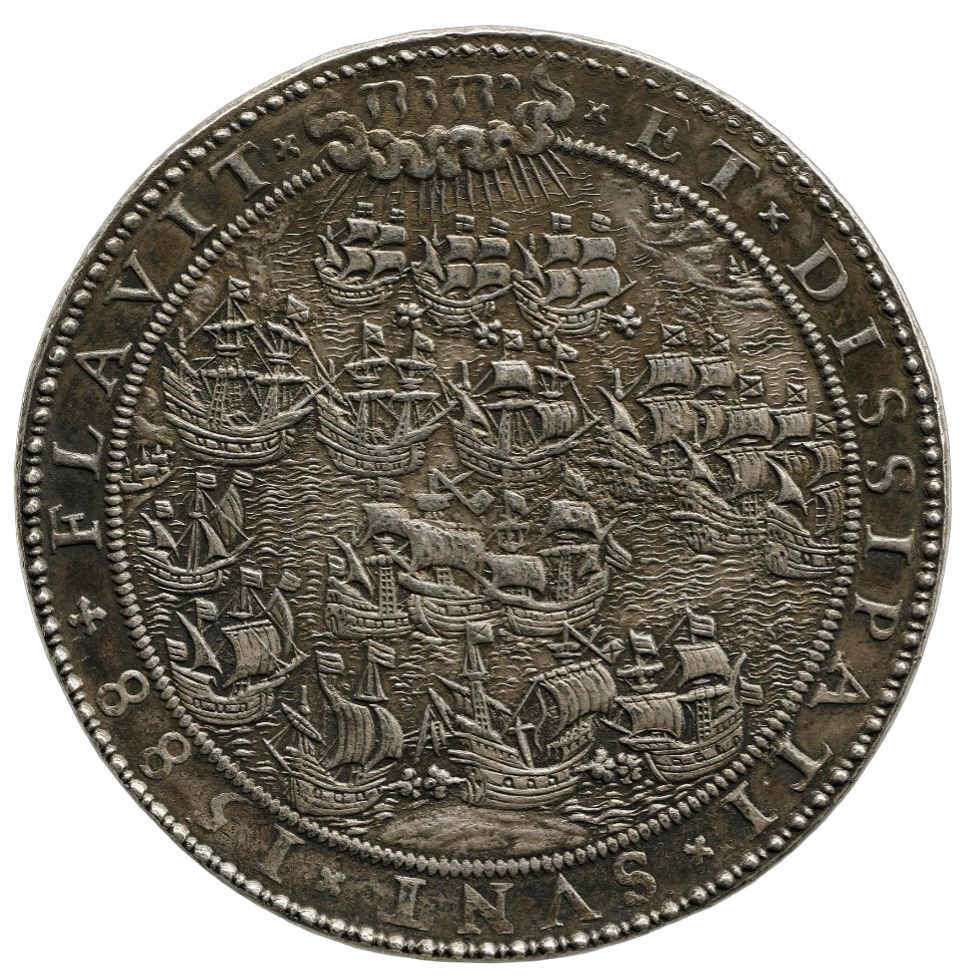
Figure 1: Dutch medal, commemorating the English victory in 1588. © The Trustees of the British Museum. CC BY-NC-SA 4.0.
The winds that do the scattering work of the Lord are prominently featured in many of the armado/bravado poems, too. For example, George Wither introduces a version of the idea in his Tuba-Pacifica (1664). In his poem, a voice addresses the English and urges them to recall the events of 1588
… when the pow’rfulst of your neighbouring Nations
Seem’d so assured of their expectations,
That their Sea Forces, in a proud bravado,
Were termed an Invinsible Armado;
Till GOD befriending you, did with one puff
Bring down their Pride, and blow their Malice off.17
Wither tells the story of the Armada as a story of puffing and counter-puffing. The Spanish launched their Armada with a proud bravado, a little puff of air produced by a boastful man. God then blasted the Armada with “one puff.” The passage is a vernacular gloss on the Middleburg medal’s flavit… et dissipati sunt.
Many of the same ideas are put forward in “Upon the Spanish Armada,” which I discussed in section I of this article. Since the poem is only 32 lines long, I will insert it here:
Poor England’s Ruin is design’d,18
The Pope and Spain have combin’d,
Both have Infallibly Decreed
In eighty eight, England must bleed:
A vast Armada Spain prepares,
The Cost and Toil of many Years;
An hundred fifty Sail, and more,19
Come thundring from the Spanish Shoar;
The Pope to make up the Bravado
Stiles it, The INVINCIBLE ARMADO.
Whose vast and numerous Hulls contain
The Treasure and the Streng[th] of Spain:
Full twenty thousand Sold[ie]rs,
And to increase our Woes and Fears
Fetters and Chains they did prepare,
The Marks of Slavery we must wear:
Religion, Law, and Liberties,
Are all design’d a Sacrifice
To Romish Cruelty, and we
Most wretched Slaves Condemn’d to be.
Our Queen with watchful Eyes surveys
Th’ approaching Storm, and soon doth raise
Two Royal Armies, to withstand
The bold Invaders of our Land:
A gallant Fleet too, she provides.
But God himself the Case decides:
The Lord of Hosts soon made them see
There’s none Invincible but He.
He with a breath of Wind doth blast
Designs so mighty and so vast,
That all might see that none but he,
An Universal King can be.20
Here again the Spaniards are presented as puffed-up braggarts, and here again God is credited with chastening the proud. The story of the Armada is presented as an exemplum, reminding readers of the truth of the proverb, pride goeth before a fall. In this poem, and in several others I turned up, one senses the influence of Protestant theologians like Luther and Calvin, who emphasized the massive disparity of power between God and human beings. The Lord of Hosts is so potent that it requires only the slightest effort on His part to wreck even the most ambitious plans of puny human beings.
In 1680 James Salgado published a poem in Latin, with a parallel text in English. In the poem, he praises Queen Elizabeth, “that Noble Queen, / Who us from Popish bondage did redeem,” while telling a similar story about the Protestant winds of 1588:
While yet this Noble Queen sate on the Throne,
The Spaniards Hatched Mischief, came upon
Her Majesty, with all their great Armado,
Threatning the English with a proud Bravado…Now when the Spanish and the English Fleet,
Together in the boistrous Seas did meet[,]
Against the Spanish God stretcht out his hand,
The sevral Winds came forth at his Command,
Both East and West, both South and Northern Wind,
Against the Spanish Forces were combin’d;
So that the Ships fell foul of one another,
Then they were sadly bruis’d and broke together:
Both Ships and Men i’ th’ Sea were overturned,
And what the Waters spared, the Fireships burned.
Thus God gave her a Glorious Victory,
And brought his People out of Jeopardy.21
Englishmen often connected the defeat of the Armada in 1588 to other remarkable events in English history, including the exposure of the Gunpowder Plot in 1605. In 1621, Samuel Ward produced a print that juxtaposed these two events and presented both as evidence of providential superintendence.
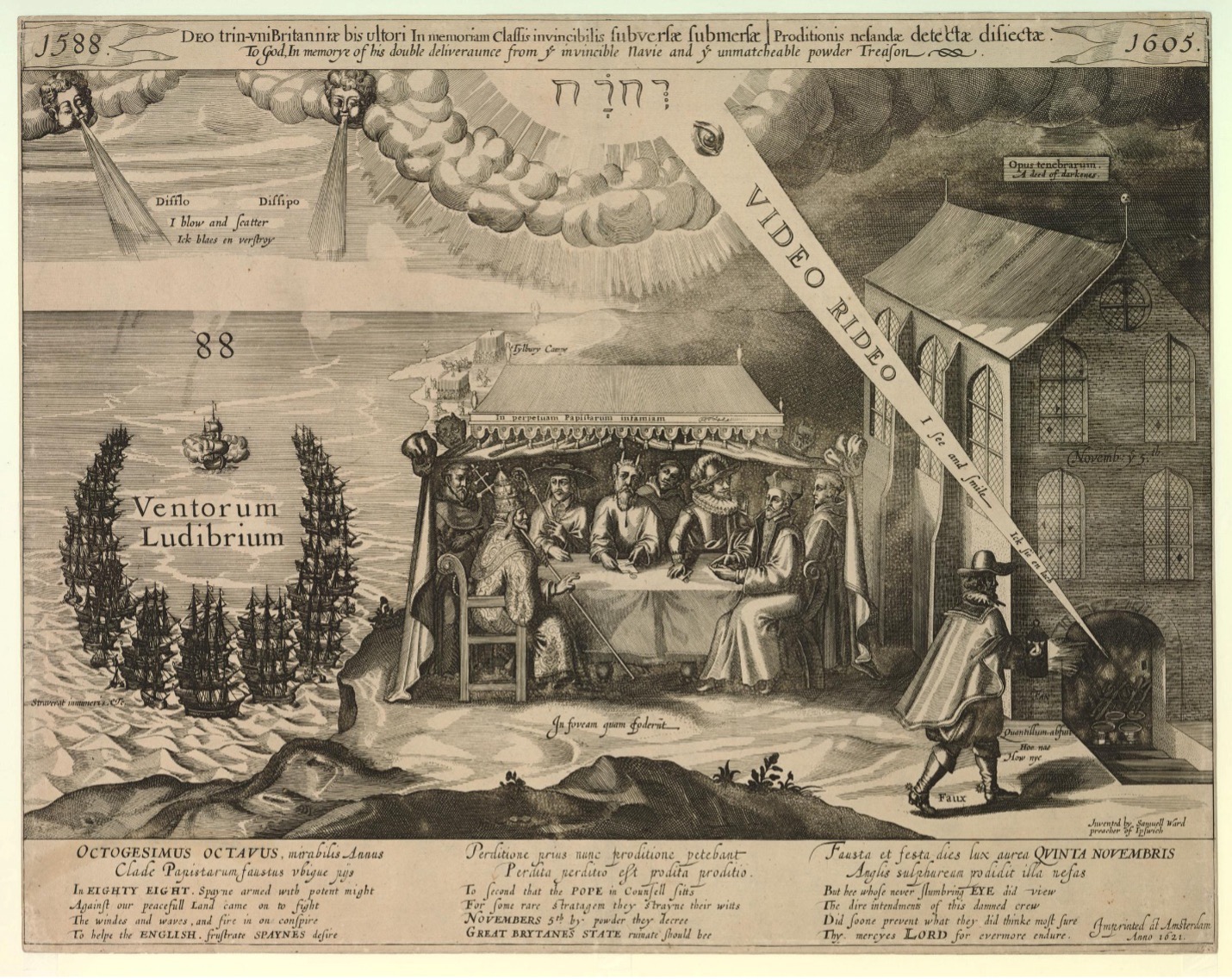
Figure 2: Anti-Catholic print by Samuel Ward, 1621. © The Trustees of the British Museum. Museum number 1847,0723.11. CC BY-NC-SA 4.0.
At the top of Ward’s print there is a dedication, in Latin and English: “To God, In memorye of his double deliveraunce from ye invincible Navie and ye unmatcheable powder Treason.” In the image below, we see the Pope and other Catholics plotting (in the center), the Spanish Armada drawn up in the shape of a crescent (on the left), and the House of Parliament in Westminster (on the right). Guy Faux (foreground, right, in hat and long cloak) is shown walking toward the House of Parliament, the basement of which he has filled with barrels of gunpowder. Above the Armada the winds are depicted, with the words “Difflo: Dissipo”: “I blow and scatter” (another variation on the flavit… et dissipati sunt topos). Above the building we see the tetragrammaton, the eye of God, and a beam of light that brings the plot to light. Within the beam of light the artist has written “Video Rideo”: “I see and smile.” Four lines of verse below point the moral:
But he whose never slumbring EYE did view
The dire intendments of the damned crew
Did soone prevent what they did think most sure[.]
Thy mercyes LORD for evermore endure.22
After the revolution of 1688, Protestant poets began adding another event to their list of providential interventions. They suggested that it could hardly be an accident that the Spanish Armada was defeated in 1588 and James II’s efforts on behalf of the old faith were defeated exactly a hundred years later in 1688:
In .88 came proud Spain[’]s Armado,
With Brags against our Church and great Bravado.
In .88, that Number of Salvation,
King William came to save our Church and Nation.23
By way of summary, I would say that I went looking for a rhyme and found a whole worldview. I found a whole set of patriotic, Protestant, providentialist poems that show the English gaining confidence in themselves, their church, and their navy. The authors of these armado/bravado poems give voice to a shared sense that England was a nation favored by God, and this sense would, literally, launch a thousand ships and lead to the establishment of colonies all around the world. What we see in the armado/bravado poems is a nascent confidence in the nation — a confidence that would fuel the growth of the British Empire, with all of its achievements and excesses.24
This song is listed as a likely source for Johnson’s quotation on the Dictionary website maintained by Brian Grimes: https://www.sjdictionarysources.org/anon.html ↩︎
The poem is printed on page 155 of the sixth edition (London, 1701). It was not included in earlier editions. ↩︎
Style, v. to call, to term, to name (Johnson’s Dictionary). ↩︎
To make good: to fulfill, accomplish (Johnson’s Dictionary). Cf. to make up: to get together; to compose, as of ingredients; to shape; to conclude (Johnson’s Dictionary). ↩︎
Samuel Johnson, Biographical Writings: Soldiers, Scholars, and Friends. Volume 19 of the Yale Edition of the Works of Samuel Johnson, ed. O M Brack., Jr., and Robert DeMaria, Jr. (New Haven and London: Yale University Press, 2016), 84. ↩︎
Skeltonic verses are named for John Skelton (c.1463-1529) who wrote poems with very short lines and strong rhymes, often ludicrous. ↩︎
Condigne: “worthy of a person, suitable, deserved… it is always used of something deserved by crimes” (Johnson’s Dictionary). ↩︎
Crusado: “a coin stamped with a cross” (Johnson’s Dictionary). ↩︎
Invado: not listed in Johnson’s Dictionary or the OED. The ending -ado is a regular past-tense suffix for all ‑AR verbs in Spanish, and past participles are often used as nouns; thus, el abogado (the lawyer) comes from the verb abogar (to advocate for), el delegado (the delegate) comes from the verb delegar (to delegate), etc. This means it is easy to produce Spanish words that rhyme with bravado. ↩︎
Underbring: bring down, conquer, defeat, ruin. The quoted passage comes from p. 2. ↩︎
Eliza’s wrack: the wrack (wreck, ruin) and overthrow of Queen Elizabeth I. ↩︎
Don: a Spanish nobleman. ↩︎
This line makes more sense if the order of the verbs is reversed to coincide with the order of events: before the engagement, the Spaniards “came on” (i.e., advanced) bravely, but afterwards they barely “got off” (i.e., got away) with their lives. ↩︎
Tane: taken, made into a monosyllable via ellipsis. ↩︎
Taylor’s providentialist sonnet sequence is titled “God’s Manifold Mercies.” It can be found in All the Works of John Taylor the water-poet (London, 1630), 144-5. ↩︎
On the medal, the name of God is omitted and the tetragrammaton is used instead, in accordance with contemporary Protestant practice. With regard to the winds as instruments of God, compare Job 4:9: “By the blast of God they perish, and by the breath of his nostrils are they consumed.” ↩︎
George Wither, Tuba-pacifica, seasonable precautions, whereby is sounded is sounded forth a retreat from the war intended between England and the united-provinces of lower Germany (London, 1664), 11. ↩︎
Design’d: planned. ↩︎
An hundred fifty Sail: 150 warships (synecdoche). ↩︎
I quote from Hall, Jacob’s Ladder, 115-116. ↩︎
James Salgado, Carmen in serenissimae Reginae Elizabethae Natalitia, classem Hispanicam ab ipsa devictam, & conspirationem papisticam antiquam & modernam… (London, 1680), 1. ↩︎
For background on Ward’s print, and on providential thinking in general, see Alexandra Walsham, Providence in Early Modern England (Oxford: Oxford University Press, 2001), especially chapters 1 and 5. ↩︎
Francis Moore, Vox Stellarum; or, a loyal almanack for the year of human redemption, 1738 (London, 1738), 8. Moore finds special significance in the number 8: “If History we search, we there shall find, / This number ever to our Church was kind” (8). ↩︎
AI was not used in the writing of this article. However, Copilot AI was used for background research on some issues, including providentialist thinking and Spanish ‑AR verbs. ↩︎