


The Cambridge Introduction to Samuel Johnson, by Robert DeMaria and Dan Hitchens
This new volume by Robert DeMaria and Dan Hitchens might best be understood as part of an important and underappreciated resurgence of the historical introduction in academic publishing. As JNL readers probably sense, during the past few decades, academic publishers have decided to issue a great number of “handbooks,” “companions,” and introductory critical volumes on a stunning variety of topics. Although designed for both academic and non-academic readers, many of these works are formidable scholarly works by anyone’s standards. This is especially true of the Oxford handbooks, an ongoing series that consists of well over a hundred volumes. The Oxford handbooks typically address a subject with a rich scholarly history and include relatively concise scholarly essays by leading scholars on various aspects of the subject, with thoughtful suggestions for further reading. As readers of JNL know, Samuel Johnson has an Oxford handbook devoted to all aspects of his career, edited by Jack Lynch. At 704 pages, it’s a hefty volume, comprised of learned essays by thirty-six scholars. (Full disclosure: I contributed an essay on the evolution of Johnson’s sense of humor.) And true to generic expectations, the essays aspire not to present the final word on various aspects of Johnson’s achievement but rather to provide reliable, readable observations and stimulate further thought.
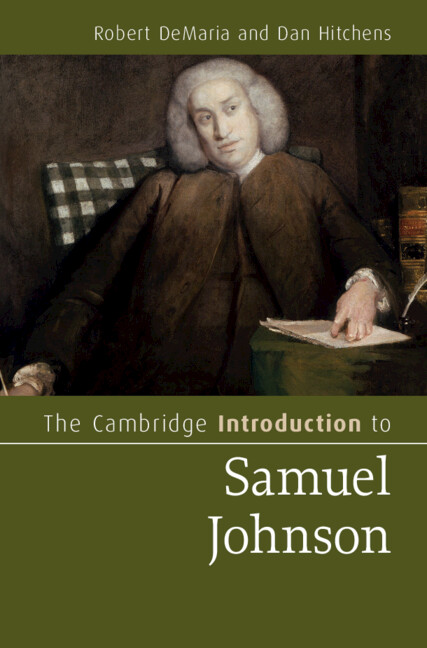
Figure 1: Cover of The Cambridge Introduction to Samuel Johnson
Cambridge University Press has committed itself to a similar publishing venture, producing hundreds of “companions,” as Cambridge calls them. Though somewhat shorter in length, the Cambridge companions, like the Oxford handbooks, address a great range of academic topics. And eighteenth-century subjects figure prominently in the collection. Again, readers of JNL will be familiar with The Cambridge Companion to the Novel (2006), edited by John Richetti, The Cambridge Companion to Laurence Sterne, edited by Thomas Keymer, The Cambridge Companion to Emma, edited by Peter Sabor, as well as many others. Samuel Johnson has not one, but two, companions on his complex achievement, both edited by the erudite scholar-cum-editorial director, Greg Clingham. The most recent, The New Cambridge Companion to Samuel Johnson (2022) includes seventeen essays on various dimensions of Johnson’s life and work, and to the editor’s credit, only three essays were written by scholars whose work appeared in the earlier 2006 companion. And this time around, those three scholars address different topics.
Perhaps the most popular versions of this currently flourishing but not unprecedented genre are Oxford’s pocketbook-sized “very short introductions,” which typically appear in large racks near the check-out counters at the better bookshops in college towns. Although written by single authors and usually not much longer than 100 pages, these volumes, like the Oxford handbooks and the Cambridge companions, are written by leading scholars in their respective fields. But this publishing venture is strikingly different in scope: there seems to be no limit whatever in subject matter. As an Oxford ad for the series puts it, “from Public Health to Buddhist Ethics, Soft Matter to Classics, and Art History to Globalization,” these little books seem cover all sorts of topics and ideas, especially those in currently in vogue. And although the readership might well include professors or university students hoping to learn more about a newfound interdisciplinary interest, it probably consists more of “common readers” who keep up with at least some of the influential ideas of our times. And some of the VSIs, as insiders call them, have an added comic appeal because of their standardized subtitles. Among the works whose full titles may elicit a chuckle are Kant: A Very Short Introduction; Ideology: A Very Short Introduction; Meaning: A Very Short Introduction; and (my favorite) The Rule of Law: A Very Short Introduction. While the professorial historical introduction is certainly an old genre, closely related to college lecturing, there seems to be a fresh appetite for this kind of writing today, and DeMaria and Hitchens’s superb new book seems designed to capitalize on this current trend.
Since the “introduction” is flourishing once again, we might begin by asking how well DeMaria and Hitchens embrace the requirements of the genre and how well they gratify the possible expectations of their readers. In my view, they embrace the generic demands of the “introduction” with great skill, and consequently, I expect both seasoned Johnsonians and relative newcomers will greatly enjoy spending, say, an afternoon with this lively little book.
Any good introduction to Samuel Johnson must exhibit not only full control of Johnson’s extensive and varied writings but a secure knowledge of the secondary scholarship, especially that written after the Second World War. There is perhaps no one alive today who knows this vast body of “learning,” in the Johnsonian sense of the word, better that Robert DeMaria. His co-author, Dan Hitchens, who studied at Oxford under the tutelage of Freya Johnston and is now a journalist and senior editor at First Things, the American monthly on Catholic intellectual life, is entirely at home with the massive Johnsonian oeuvre, too. Together they offer readers trustworthy distillations of key features of Johnson’s works and the related scholarly debates. For example, in the opening chapter on Johnson’s “Life and Times,” they summarize the national significance of his long-delayed edition of Shakespeare with the pithy statement, “Shakespeare was Britain’s poet, and Johnson was Shakespeare’s (and thereafter Britain’s) critic and scholar” (18). Obviously, the subject of Johnson’s relation to Shakespeare’s emergence in the eighteenth century as Britain’s national poet is complex, as the vast body of scholarship on the subject proves. But in the opening chapter of an introductory volume, with later chapters to come on Johnson as a critic and as a scholar, such compression is welcome. And for those readers well versed in the reputation of Johnson’s edition of Shakespeare, this statement is right in line with the high praise that the great eighteenth-century Shakespearean Edmond Malone lavished on the Preface in Johnson’s edition.
This book is full of other moments when DeMaria’s and Hitchens’s mastery of the full range of Johnsonian materials leads to fruitful commentary. In “Poet and Storyteller,” one of the best chapters in the book, DeMaria and Hitchens comment on how often Johnson returns to themes he explores in his 1748 poem, The Vanity of Human Wishes. In elaborating on this point, they highlight Gwin Kolb’s observation in the introduction to the Yale edition of the Rambler that in “The Fountains,” Johnson followed the pattern of the story of “The Choice of Hercules,” by the fifth-century BCE sophist Prodicus of Ceos. The authors then comment,
Northrop Frye liked to point out that writers often write and rewrite the same myth throughout their careers. ‘The Choice of Hercules’ is that myth for Johnson. He rewrote it also in ‘The Vision of Theodore, the Hermit of Teneriffe.’ One of the best essays ever written on Johnson, Lawrence Lipking’s “Learning to Read Johnson: ‘The Vision of Theodore’ and The Vanity of Human Wishes,” shows the similarities of these works and their mutual centrality in the myth that Johnson was always rewriting. (56)
Although this distillation is more extensive and more scholarly in nature than the earlier comment on Shakespeare and Johnson, it is equally unimpeachable. And for those readers coming to criticism on Johnson as novices, this brief statement provides practical advice on what article to read to become a better reader of Johnson. While all Johnson scholars may have their favorite article on Johnson, DeMaria and Hitchens resist indulging their own tastes and choose instead a critical essay that novices can “turn to use,” as Johnson might put it.
This is not to say that DeMaria and Hitchens stint on presenting their own individual stylistic merits in this book. The work clearly shows signs in places of being written in two somewhat different voices. But in the hands of DeMaria and Hitchens, this is a strength rather than a distraction. Why try to smooth out two distinctive voices into a single bland one? In fact, among the charms of the book are the subtle movements from what may be DeMaria’s light-handed but intensely scholarly approach to eighteenth-century books and their contexts, especially those related to Johnson’s Dictionary, and what may be Hitchens’s more spirited and journalistic commentary on the cultural and religious politics of Johnson’s time. In the chapter on Johnson as a scholar, for example, some readers will sense the hand of DeMaria in the detailed description of Johnson’s failed attempt to edit the works of the Italian Renaissance scholar Angelo Poliziano, as well as other attempts early in his career to conceive of himself as in the line of the European humanist scholars. The comments in this section on the philological dimension of some of Johnson’s works are especially insightful. “His edition of Roger Ascham’s English Works and of Thomas Browne’s Christian Morals also qualify [as philological] to a degree, as does some of Johnson’s poetry — notably his translation into Latin of many Greek epigrams from the Greek Anthology — parts of many of his biographies, and his bibliographical work on the Catalogue of the Harleian Library” (62). That’s a superb condensation of some of the key ideas in DeMaria’s earlier influential critical biography of Johnson, supplemented with secure knowledge of the full scope of Johnson’s poetry, including that written in a foreign language — a knowledge amply on display in DeMaria and Robert Brown’s new edition of Johnson’s poetry (Routledge, 2024), a work destined to be the standard edition of Johnson’s poetry for generations to come. Indeed, all of Johnson’s “scholarly activity — this immersion in books” at this time of his life helps readers understand how Johnson primed himself for his “greatest scholarly projects” (63) — his Dictionary and his edition of Shakespeare. A concentrated presentation of Johnson’s complex ways with books and learning is a hallmark of this volume, and it’s delightful to see the presence of DeMaria’s profound knowledge of Johnson’s life of reading and thinking in such deft, succinct passages — regardless of whether DeMaria actually wrote it!
A somewhat different style characterizes the chapter on Johnson as a journalist, which suggests that perhaps Hitchens was the lead author of this section. But regardless of who wrote it, it’s equally pleasurable because it appears to be written by someone with an intimate knowledge of the demands and realities of writing for the periodical press, the sine qua non of anyone introducing Johnson’s work as a journalist. “Journalist” is the second chapter of the book, and to help readers understand the contexts of Johnson’s early career in letterpress, the authors note the population of Great Britain in the first half of the eighteenth century and explain that the circulation of the Gentleman’s Magazine in Johnson’s day was “proportionally not much less than the Guardian or Financial Times today” (23). But suppressing easy comparisons to contemporary journalism, the chapter moves on to emphasize how distinctive Johnson’s Rambler was. The Rambler “is sometimes described as the eighteenth-century equivalent of a newspaper column, but whereas modern columnists feel an obligation to grab the reader’s attention, Johnson seems to have deliberately eschewed many of the tricks of the journalists trade — gossip, reference to current affairs, and so on” (30). The style here — bold, confident, and a touch conversational — is different from the style in the chapter on Johnson as a scholar, but it’s equally enjoyable because it suits the subject. And as the chapter unfolds, we see that the authors understand fully Johnson’s aspiration in the Rambler to write about timeless or, as Johnson might put it, “durable” truths. Johnson repeatedly treats the mind, the authors write, “as a factory of comforting illusions waiting to be exploded. As early as Rambler 2, Johnson writes that we are always seeking experiences which turn out to be less than we expected. Anticipation beats reality” (34). Indeed, a recurring theme of the Rambler is “its crushing awareness of how we delude ourselves about the future…. A wise person doesn’t think too much about the future” (35). The direct, concise prose style of the chapter on Johnson the journalist complements the subject matter, just as the learned style complements the chapter on Johnson as a scholar. And in that Johnson was both a journalist and a scholar — “the professional writer par excellence” (41) — the shift in tone ranks as one of the most attractive features of the book. It reflects two important components of Johnson life as a writer — and helps explain why he remains a hero to many journalists and scholars today.
Although DeMaria and Hitchens generally avoid inventive, arresting interpretations of Johnson’s life and works, they both have their own critical predispositions and proclivities, and I can imagine some academics taking issue some aspects of the book. For example, the Johnson who appears in this book is an especially devout man whose Christianity stands at the heart of his social and political ideas. “Central to Johnson’s thought is his awareness of the Christian doctrine of original sin — each person’s strong, irrational tendency towards evil. We are caught in between kindness and cruelty” (99). And cruelty can be inflicted not only by people but by the state, as Johnson points out memorably in his strong criticism of capital punishment for crimes of different degrees of iniquity (in Rambler 114). In the chapter on Johnson as a critic, the authors write, “Johnson’s belief that criticism is subordinate and instrumental to religion and morality has ramifications throughout his criticism. In a more explicit way than other religious critics (C.S. Lewis, say, or Northrop Frye), Johnson makes religion and morality part of the evaluative calculus” (91). Readers who take issue with this orientation, however, perhaps underestimate how entirely different the moral and religious world of eighteenth-century London was from our own moral world today. What DeMaria and Hitchens present is completely in line with Johnson’s own words on his writing, as well as with the standard interpretations of much of Johnson’s writing, as befits an introduction. In Samuel Johnson and the Life of Writing (1971) — a work published more than half a century ago — Paul Fussell writes, “nothing he feels, thinks, or says about writing can be understood outside the context of his personal religious life, especially his sense of the Christian obligation to write ‘sincerely’ and to criticize responsibly” (91). In fact, Fussell argues that Johnson “conceives of writing as something very like a Christian sacrament, defined in the Anglican catechism as ‘an outward and visible sign of an inward and spiritual grace given unto us’” (112). DeMaria and Hitchens’s emphasis on the importance of Johnson’s religious life simply provides a trustworthy context for contemporary readers, most of whom probably come to Johnson from a secular perspective. And it’s in keeping with DeMaria and Hitchens’s foundational commitment to provide historical context to readers in their introduction, an orientation encapsulated in the epigraph to Chapter 1, taken from Johnson’s Life of Dryden: “To judge rightly of an author we must transport ourselves to his time” (1).
Other readers might register other minor criticisms. Perhaps the last chapter on Johnson’s afterlife, “Legend,” concentrates so much on British reactions over the past two and a half centuries that the enormous American appetite for Johnson and his circle, especially in the years after the Second World War, is stinted. One might also argue that DeMaria and Hitchens focus so much on the extent to which Johnson repeated himself, in one way or another, over the course of his long life that the evolution of Johnson’s thinking and writing is not addressed in enough detail. As Gwin Kolb once wrote in a review of the earlier Cambridge Companion to Samuel Johnson, “a number of Johnson’s opinions were decidedly not monolithic, [and] shifted and evolved with the passing of time and circumstances.”1
Perhaps the most obvious possible criticism of the volume is that it says little about Johnson’s conversation and Boswell’s part in preserving, and in Johnsonising, it. Certainly an ample portion of the Johnsonian canon is what he said in conversation. For it is there, as in his writing, that one obtains a view of his mind, as Boswell and his contemporaries perceived. At the end of the Life of Johnson, Boswell resists trying to explain his feelings on learning of the death of Johnson and defers to William Gerard Hamilton, “an eminent friend,” who says in words that most JNL readers will be able to recite from memory: “He has made a chasm, which not only nothing can fill up, but which nothing has a tendency to fill up. Johnson is dead. Let us go the next best: — there is nobody; no man can be said to put you in mind of Johnson.” Hamilton was speaking not only of Johnson’s writing, but his conversation, and his sheer intellectual presence. Johnson’s power as a man of letters exceeded the power of his writings, and perhaps DeMaria and Hitchens might have included more on his conversation, a form of linguistic display that often rose to the status of literature when Johnson spoke.
And yet these possible criticisms are at best minor criticisms that perhaps say more about how other academics and writers might write their own introductions to Samuel Johnson. Indeed, the excellence of the DeMaria and Hitchens’s book depends on the uninhibited viewpoints and special talents of both DeMaria and Hitchens, and the result is an immensely readable historical introduction to Samuel Johnson that deserves to stand alongside some of the best historical introductions to Samuel Johnson, including that by David Nichol Smith, published in 1913.
I introduce David Nichol Smith’s work because his introductory historical biography, published as Chapter VIII of Volume X (The Age of Johnson) in the mammoth Cambridge History of English Literature (Cambridge Univ. Press) has a similar spirited attention to the dexterity of Johnson’s work in journalism, poetry, philology, and biography, and it represents well the state of scholarship on Johnson during his time. But because modern Johnsonian scholarship was in its infancy then, much remained to be done, as Nichol Smith suggests throughout the essay. In many ways, DeMaria and Hitchens’s book, with its excellent handling of all the Johnsonian work that has taken place since 1913, fulfills Nichol Smith’s implicit hopes for modern Johnsonian scholarship.
At the same time, one must also wonder whether the current appetite, or need, for such an introduction in the first place is analogous to the situation facing Nichol Smith, when the general readership of Johnson’s writings was small and needed a lift. If this is true, and if the vogue for multi-volume introductory histories of English literature a century ago resembles the vogue for stand-alone learned “introductions” today, then DeMaria and Hitchens are the ideal writers to provide a similar lift for today’s readers, especially independent “common” readers who have just discovered Johnson and who, like the sculler boy who took Boswell and Johnson to Greenwich in the summer of 1763, are eager “to get knowledge.”
Gwin Kolb, review of The Cambridge Companion to Samuel Johnson, ed. Greg Clingham, Modern Philology 98:2 (May 2001) 680. ↩︎