


Jane Austen’s Bookshelf: A Rare Book Collector’s Quest to Find the Women Writers who Shaped a Legend, by Rebecca Romney
In this sprightly “unconventional memoir” (239) as she calls it, Rebecca Romney describes how she set out to learn more about the women writers who preceded and influenced Jane Austen, by reading and — equally important — by collecting their works. A lifelong Austen fan and a rare book dealer by profession, Romney was once, she confesses, utterly unfamiliar with the women writers of the late eighteenth century. Her book describes her feelings of delight, astonishment, and even shame as her project led her to authors whose novels were readable, whose experiences were relatable, and whose achievements were remarkable.
Jane Austen’s Bookshelf devotes a chapter each to Austen, Frances Burney, Ann Radcliffe, Charlotte Lennox, Hannah More, Charlotte Smith, Elizabeth Inchbald, Hester Lynch Piozzi (Mrs. Thrale), and Maria Edgeworth. Each chapter reviews the subject’s life and discusses her principal literary accomplishments, including works that Austen mentioned in her novels or correspondence. Romney describes tracking down copies of these books, whether first editions or recent paperbacks, and reading them for the first time. She asserts that she had never read any of them before, which is somewhat hard to believe, but her enthusiastic account of her discoveries is very engaging. The Mysteries of Udolpho, Romney reports, is “one of the best reading experiences I’ve had,” while “I found that The Female Quixote was far wittier than any of Austen’s novels.” She was “riveted” by Miss Milner in the first half of Inchbald’s A Simple Story, so enthralled by Evelina that she finds herself getting up from her couch to go to the heroine’s rescue… but also, she confesses, utterly unable to get past the first chapter of More’s Coelebs in Search of a Wife.
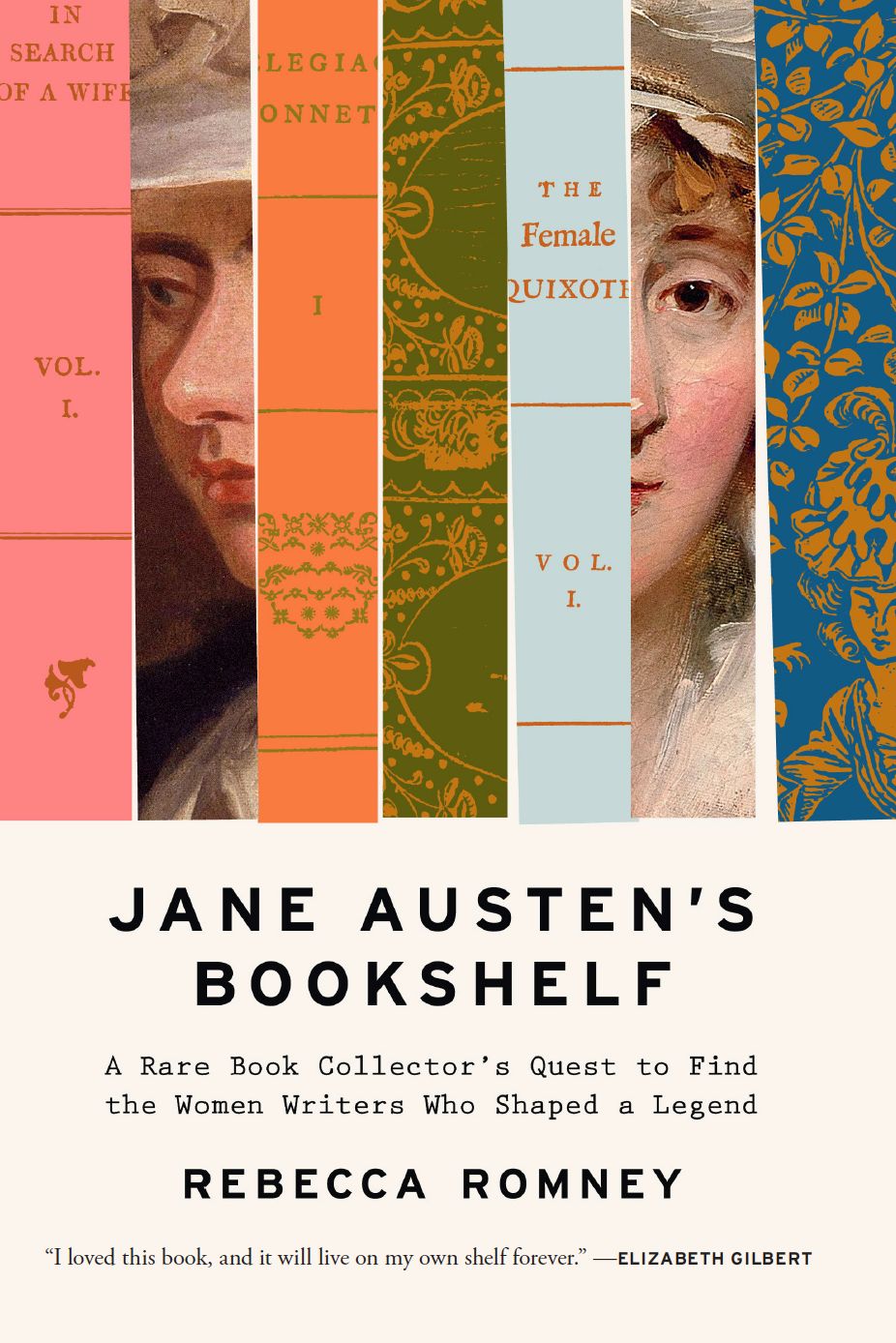
Figure 1: Cover of Jane Austen’s Bookshelf
The discussion of each writer’s works and biography is complemented by accounts of related topics, conveyed in a breezy, informative style. The chapter on Austen emphasizes publishing details, including the interesting fact that the colophons of books published late in the year gave the date of the following year, to encourage sales with an appearance of newness. The chapter on Radcliffe offers an excellent summary of rise of the gothic novel and its reception; that on Burney describes late-eighteenth-century anxieties about novel reading (with an amusing digression in defense of the heroine’s habit of fainting). Inchbald’s career as an actress and playwright provides a compact introduction to Georgian theater, and a section reflecting on Edgeworth’s reputational “slide” from canonical to regional “Irish novelist” is especially illuminating (297). In other areas, Romney’s reading prompts autobiographical reflections, as when she connects her discomfort with More’s proselytizing to her own break with the Mormon faith. Throughout the book Romney comes to terms with the “internalized sexism” (66) that had led her for many years to ignore these writers; she recalls with embarrassed hindsight having asserted to a client that Boswell’s Life of Johnson was the only legitimate biography of its subject, despite having never read Piozzi’s Anecdotes nor even, for that matter, Boswell.
While it is a memoir, Jane Austen’s Bookshelf is also literary history of the later eighteenth century, layered with a history of the literary criticism of the later twentieth century, the period that first canonized Austen and then, gradually, began to acknowledge the value of the women writers who preceded her. It also celebrates the way access to women’s literary history has been transformed by the internet. Particularly striking is Romney’s observation that the critics in the 1960s and 1970s who dismissed women writers as influences on Austen, choosing instead to see the hand of Johnson or Richardson or Cowper, did so having probably never read Inchbald or Edgeworth… not necessarily out of sexist contempt, but rather because copies of their books were nearly impossible to find. Today, all the novels that Romney discusses can be found online via Project Gutenberg, the Internet Archive, and/or other repositories.
I read Romney’s chapter on Piozzi with particular interest. Unsurprisingly, Romney spends little time on Piozzi’s literary works; indeed, her Letters of Samuel Johnson, which we know Austen read, because she quotes it in a letter to her sister Cassandra, isn’t discussed at all. Instead, the chapter is a sympathetic account of Piozzi’s troubled first marriage, marked by eighteen years of bearing and losing children, her happy but controversial second marriage, and her estrangement from her daughters. The book ends with tempered admiration for what Romney neatly calls Piozzi’s “unrepentant heart” (325).
Both Romney’s strengths and weaknesses as a commentator on eighteenth-century writers are demonstrated in this chapter. I appreciated her trenchant rhetorical question “What does Piozzi’s literary legacy have to do with her parenting?” (264); I cheered when she wrote that she was “sick of reading about Johnson every time I picked up a book about Piozzi” (271); and I vigorously underlined her final comment, “I saw in her a writer whom I admired for her courage to experiment, to combine genres as the surest way to stay true to herself. A model, perhaps, for my own writing. A model for this book” (279). At the same time, Romney’s claim that Piozzi “cheerfully resisted” (260) Italian friends who attempted to convert her to Catholicism is contradicted by Piozzi’s anguished annotations in the copy of Observations and Reflections that she presented to William Augustus Conway. Romney also implies without foundation that Piozzi’s daughter Hester Maria (Queeney) knew of her father’s infidelities and mistreatment of her mother; and her account of Piozzi’s break with Johnson, though not inaccurate, is weakened because Romney fails to quote the most powerful lines from Piozzi’s valedictory letter. This critique may apply to the volume as a whole: The nonspecialist reader can learn much from these pages, while the scholar may be troubled by minor irritants.
Jane Austen’s Bookshelf includes a descriptive bibliography of the volumes that Romney collected for her “bookshelf,” which is an excellent introduction to aspects of rare book cataloging and collecting. It has a useful general bibliography, and I like the way the notes are located in an easy-to-follow citation section that avoids the superscript intertextual numbers that might intimidate lay readers. I noted a few grammatical errors, and one typo, the misspelling (on two occasions) of O M Brack’s name. In some places, the prose is casual to the point of becoming vulgar. For example, Romney writes,
The high end of the collectible book market… hasn’t always valued women authors as much as their male counterparts. In this context, it really was a statement that this guy’s first edition could be picked up for a song, even in a solid leather binding contemporary to its era.
Next, I grabbed the first publication of Talfourd’s memoir of Ann Radcliffe… (97)
Phrases like “this guy” and “I grabbed” are no doubt intended to render potentially daunting material accessible, but the phrasing is distractingly unfortunate.
I enjoyed Jane Austen’s Bookshelf, but the book wasn’t written for me. It was written for my late mother, a lifelong Austen fan who also loved Burney and Edgeworth, who never got through The Female Quixote, and who kept meaning to read Udolpho. I wish I could give her my copy.